Hi, I’m Mimi! A Japanese mom in my 30s, aiming for a low-additive lifestyle for my family.

What you’ll learn from this article:
- Which additives are commonly used in store-bought baby food in Japan
- Which additives you may want to avoid when choosing baby food in Japan
- How to choose safer store-bought baby food in Japan
Baby Food and Additives in Japan
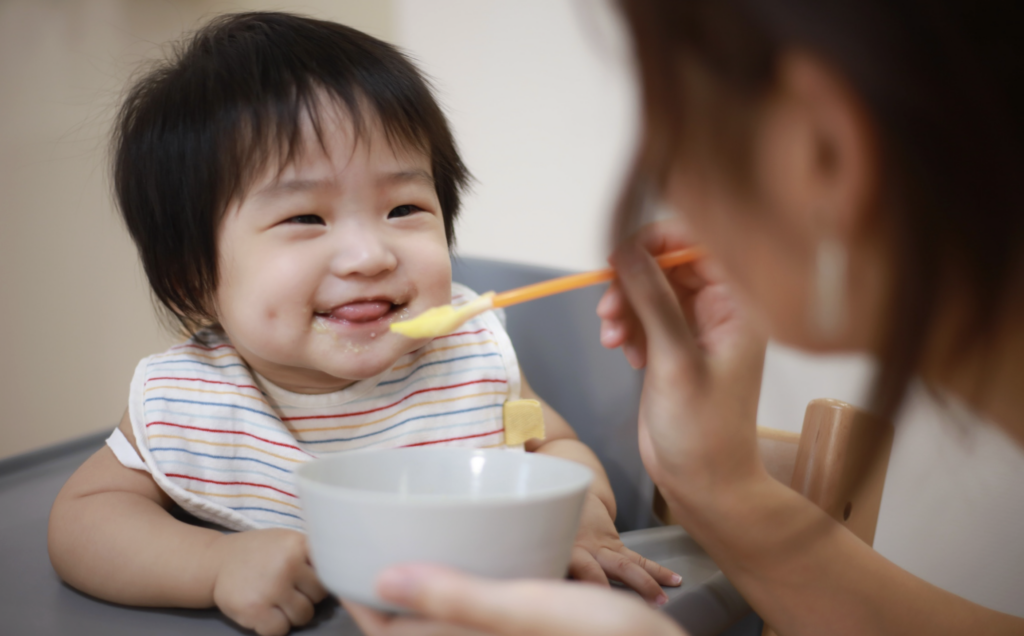
Let’s be real: commercial baby food is a lifesaver.
We all want the best for our little ones, but cooking separate meals every day can be tough.
That’s when packaged baby food really comes in handy.
In Japan, The Japan Baby Food Conference sets strict voluntary standards as below.
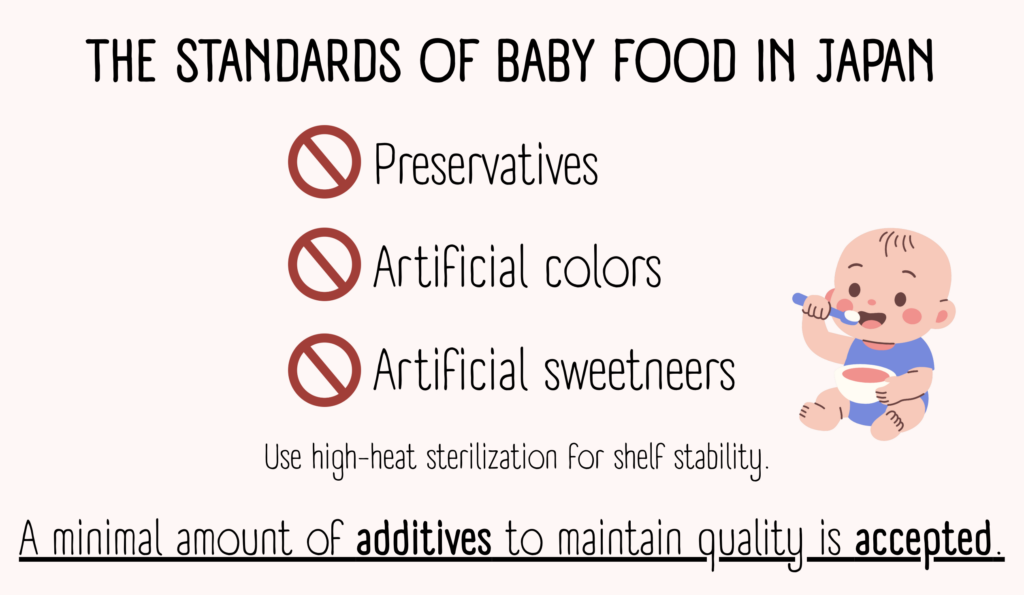
The use of additives in baby food is strictly regulated, but they are not completely prohibited.
“Safe by law” and “ideal for my baby” aren’t always the same thing.
In my journey of making Better Choices, here are the 5 ingredients I try to avoid when scanning the back of a pouch.
What to Avoid in Baby food
There are 5 things I avoid when buying baby food.
1. Thickeners / Modified Starch (増粘剤 / 加工でんぷん)

In Japan, it’s approved and widely used.
Keep in mind:
- “Modified starch” is a broad term with different types
- Some forms are more heavily processed than others
- In some countries, certain types are more strictly regulated in baby food
Many store-bought baby food contain this. So if you want to avoid it, try to find the additive-free options.
2. Emulsifiers (乳化剤)
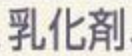
These help keep texture smooth and prevent separation.
They are commonly used and considered safe within regulations.
Keep in mind:
- Some animal studies suggest certain emulsifiers may affect gut bacteria
- Human research is still ongoing and not conclusive
- Gut health in early childhood is still a developing area of science
You cannot say this is absolutely bad for your baby’s health but it’s still better to avoid.
3. Flavoring (香料)
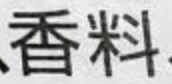
Usually listed simply as “flavoring,” without details of what compounds are used.
Keep in mind:
- It improves taste consistency, which can help picky eaters
- But it also means the actual flavor profile is not transparent
- It could make it harder for babies to learn natural taste sensitivity
I try to balance convenience with exposure to natural flavors whenever possible.
4. Sugar (砂糖)

You’ll see sugar is used in so many baby food and snacks.
But the WHO recommends limiting added sugar in early childhood.
Keep in mind:
- Early exposure to sugar can shape preference for sweet tastes
- It may influence future eating habits
- Even small amounts can add up across snacks and meals
I try to keep snacks with added sugar occasional, not daily.
5. Cornstarch (コーンスターチ)
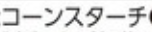
Cornstarch is widely used as a thickener or filler.
Keep in mind:
- It provides texture rather than nutrition
- A large portion of corn ingredients globally come from GMO crops (depending on source)
- Some parents prefer to limit highly processed fillers in early diet
I personally want to avoid GMO crops so I would avoid this.
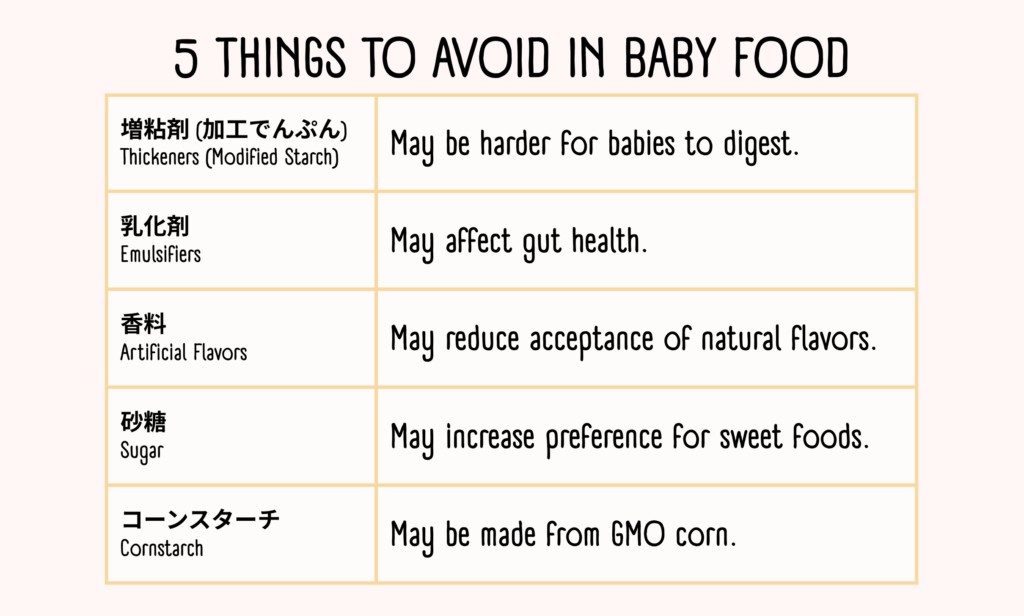
Quick Reference Chart
Save this chart for your next shopping trip!
The “Better Choice” Mindset
This doesn’t mean you should feel guilty for using a pouch that contains these additives.
The goal isn’t to follow a strict percentage or aim for “100% perfection.”
It’s about empowerment through knowledge.
• Knowledge is Your Superpower:
There is a massive difference between choosing a product because you don’t know what’s in it, and choosing it because you do know.
• An Informed Choice is a Better Choice:
If you’re in a hurry and need that convenience pouch, and you’ve checked the label and decided, “Okay, this is what I’m using today,” then that is your Better Choice for that moment.
Being aware of what goes into your baby’s body puts you in the driver’s seat.
It’s not about being a “perfect parent”, it’s about being a smart guide for your family’s health.
Take it easy, Mama! You’re doing a great job.

Comments