

Hi, I’m Mimi! A Japanese mom in my 30s, aiming for a low-additive lifestyle for my family.

Summer in Japan is no joke.
When the weather gets hot and humid, ice cream becomes hard to resist.
But if you’re trying to keep your family’s diet as clean as possible, what kind of ice cream you choose is the key.
Ice cream sold in Japan is officially divided into 4 categories.
Understanding these labels can help you make better choices with fewer additives and more natural ingredients.
Who is this guide for?
- For people who want safer ice cream options in Japan
- For parents who want to choose better ice cream for their kids
- For ice cream lovers who care about health
Ice Cream in Japan
Ice cream in Japan is divided into 4 categories based on the amount of milk solids and milk fat they contain:
- Ice Cream (アイスクリーム)
- Ice Milk (アイスミルク)
- Lacto Ice (ラクトアイス)
- Frozen Dessert / Ice Candy (氷菓)
Among these, Ice Cream contains the most milk and cream, giving it a richer and more natural dairy flavor.
Ice Milk is lighter, while Lacto Ice contains even less dairy and often uses more vegetable oils instead.
Frozen Desserts include popsicles and shaved ice, and are known for their refreshing taste.
| Category | Milk Solids | Milk Fat |
| Ice Cream (アイスクリーム) | 15.0%+ | 8.0%+ |
| Ice Milk (アイスミルク) | 10.0%+ | 3.0%+ |
| Lacto Ice (ラクトアイス) | 3.0%+ | N/A |
| Frozen Dessert (氷菓 – Hyoka) | Under 3.0% | N/A |
Now, let’s take a closer look at these 4 categories from the perspective of ingredients and additives.
Comparing the 4 Categories from a Safety Perspective
When I say ‘safe,’ I’m referring to ice cream with fewer additives, less vegetable oil, and ingredients that feel as natural as possible.
Ice Cream (アイスクリーム)
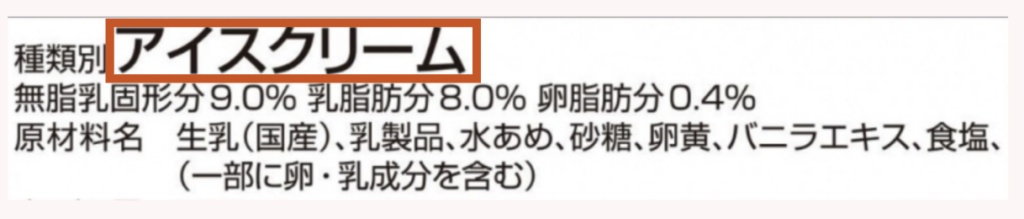
The “best” category if you want simpler ingredients.
- The Rules: At least 15% milk solids and 8% milk fat.
- The Key Point:
Under Japan’s labeling standards, products classified as “Ice Cream” cannot contain added vegetable oils. Made primarily from real milk and cream, they are naturally rich and creamy and often require fewer stabilizers and thickening agents.
Ice Milk (アイスミルク)

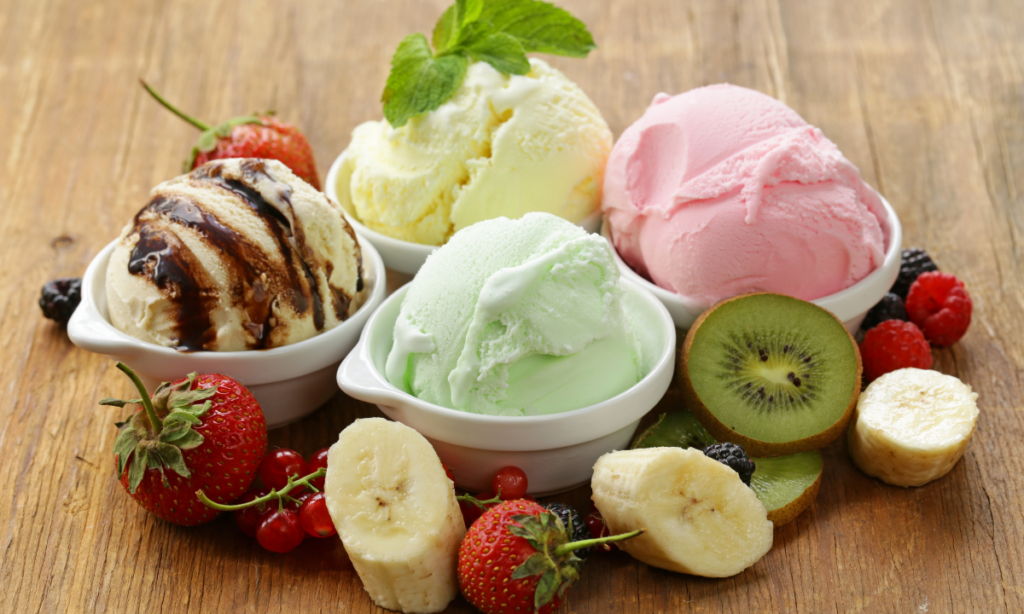
A middle-of-the-road option with the lighter taste and texture.
- The Rules: Minimum 10% milk solids and 3% milk fat.
- The Key Point:
Since it has less dairy fat than “Ice Cream,” manufacturers often add vegetable oils to maintain a creamy texture. The additives like emulsifiers and stabilizers are also frequently used. Check the label for oils and additives.
Lacto Ice (ラクトアイス)

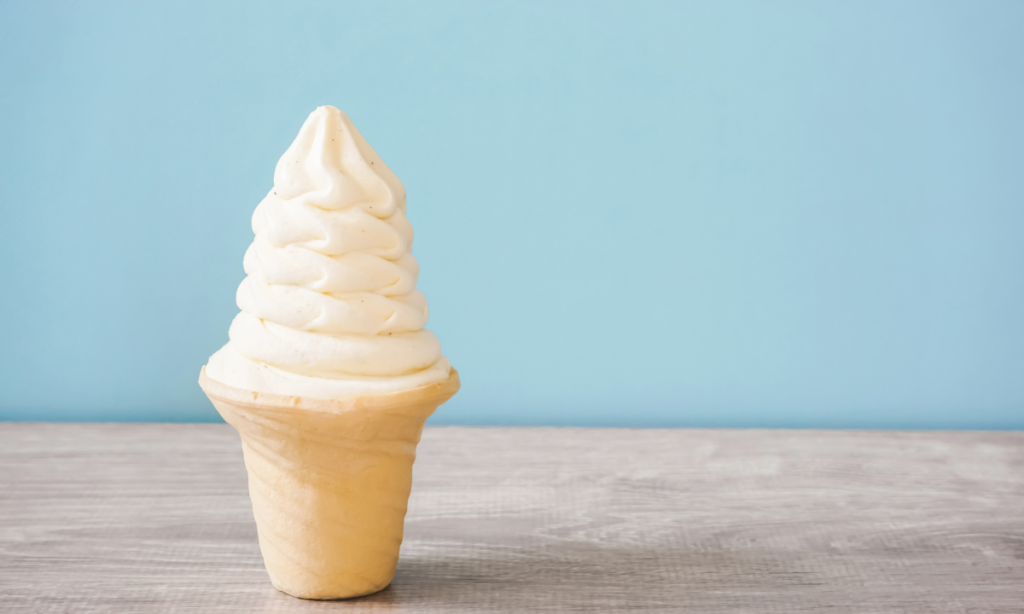
“Lacto” sounds like dairy, but these are often more processed.
・The Rules: Minimum 3% milk solids; no milk fat requirement.
- The Key Point:
They’re usually the budget-friendly options. But there is a reason.
Instead of using large amounts of milk fat, many products use:
– Vegetable oils
- Emulsifiers
- Stabilizers
- Artificial flavoring
That’s why the texture often feels extra creamy even though it contains less dairy. They are also the most likely to contain a long list of additives, artificial flavors, and sweeteners.
Frozen Dessert / Ice Candy (氷菓 – Hyoka)
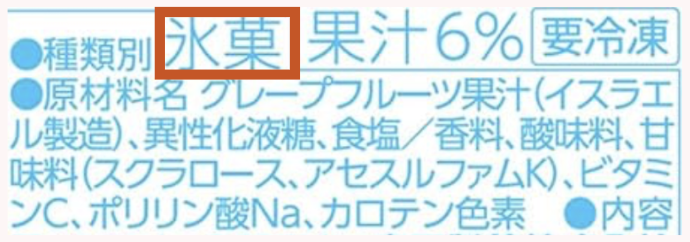
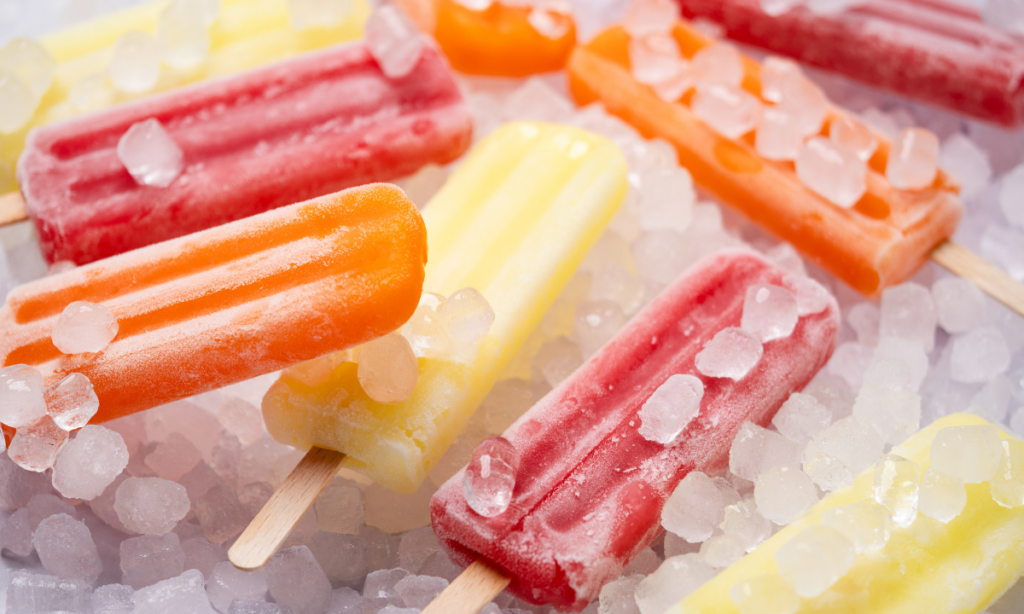
Popsicles, sorbets, and shaved ice fall into this category.
- The Rules: These contain little to no dairy.
- The Key Point:
While they are low in fat, some products may contain high-fructose corn syrup, artificial colors, or synthetic flavorings.
But simple ingredient versions do exist, so for those avoiding dairy entirely, this is the category to browse.
The “Better Choice” Strategy
Next time you’re at the konbini or supermarket, try these.
- Check the Classification: Aim for アイスクリーム(Ice Cream) whenever possible.
- Scan for Oils: Check for “Vegetable Oil” (植物油脂) near the top of the ingredients.
- Keep it Simple: If the ingredients list contains just a few recognizable ingredients like milk, sugar, cream, and eggs, that’s usually a good sign.
Of course, enjoying your favorite ice cream once in a while is completely okay too. The goal is simply to make more informed choices, not to stress over every ingredient.
Stay cool, stay healthy, and enjoy your “better” summer treats!



Comments